Method UI 2.0

MakerBot

|

2022

A ground‑up redesign of the UI that unified three printers into one system, added new XL‑specific workflows, and created a repeatable component library so engineering could ship faster.

A ground‑up redesign of the UI that unified three printers into one system, added new XL‑specific workflows, and created a repeatable component library so engineering could ship faster.

Role

Design Systems, Interaction Design, Prototyping, Usability Testing

Development

2018-2022

Release

2019 (1.0 Release)

2022 (2.0 Release)

Team

UX — Andrew Askedall, Felipe Castaneda, Dominik Strykowski

PM — Matt Jorgensen, Neil Guleria

ENG — Praveen Rajendran, Chris Moore, Erica Wisenewski, William Wong

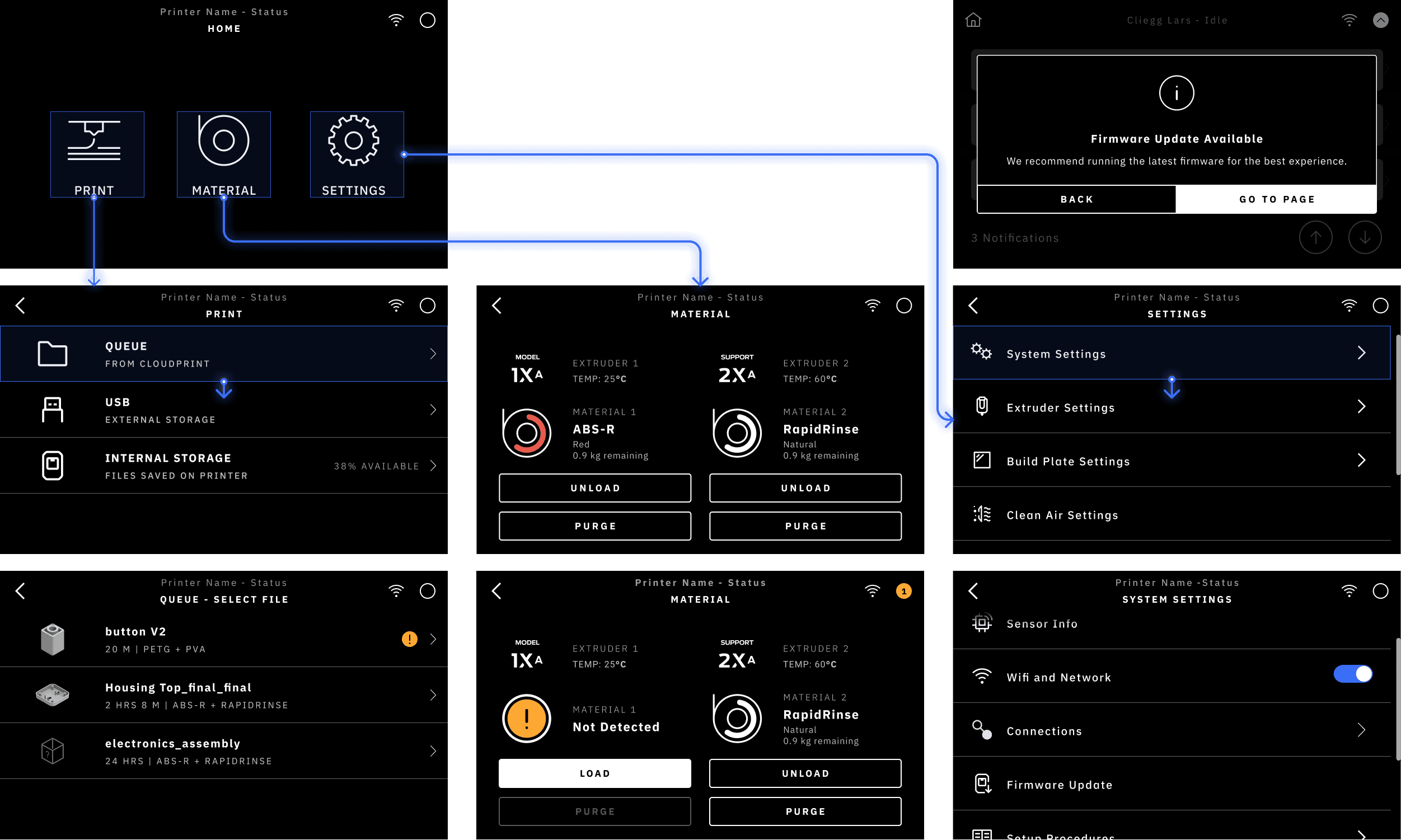
  • Unified UI platform supporting all Method printers with conditional flows for printer-specific hardware.

  • Systematic design approach with reusable components that streamlined development and improved consistency.

  • Accelerated development through modular UI architecture.

  • Ecosystem integration aligning with cloud services for seamless user experience across touchpoints.

  • Unified UI platform supporting all Method printers with conditional flows for printer-specific hardware.
  • Systematic design approach with reusable components that streamlined development and improved consistency.
  • Accelerated development through modular UI architecture.
  • Ecosystem integration aligning with cloud services for seamless user experience across touchpoints.

The redesign allowed updates to apply to all printers in the Method series

My role

UX Foundations

v 1.0

v 1.0

v 1.0

2018-2021

2018-2021

2018-2021

Mapped user flows, audited UI and physical touchpoints, built error taxonomy, and conducted usability testing
Note: During this phase, UI component development owned by another designer

System Overhaul and UI Ownership

v 2.0

v 2.0

v 2.0

2021-2022

2021-2022

2021-2022

Led divergent platform expansion: architected UI system (templates, patterns, error models), designed component library, standardized behaviors with engineers, and validated through continued UX research

Led divergent platform expansion: architected UI system (templates, patterns, errors), designed component library, standardized behaviors with engineers, and validated through continued UX research

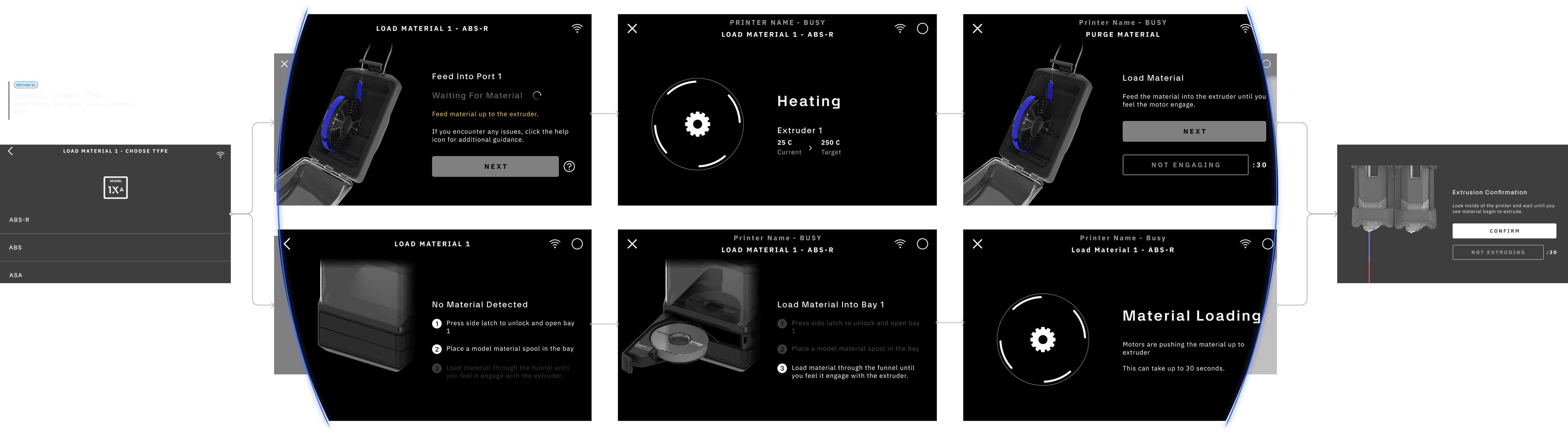
The Method XL uses an external material loading bay which requires different user interactions than the base models.

System Overview

App Shell and Layouts

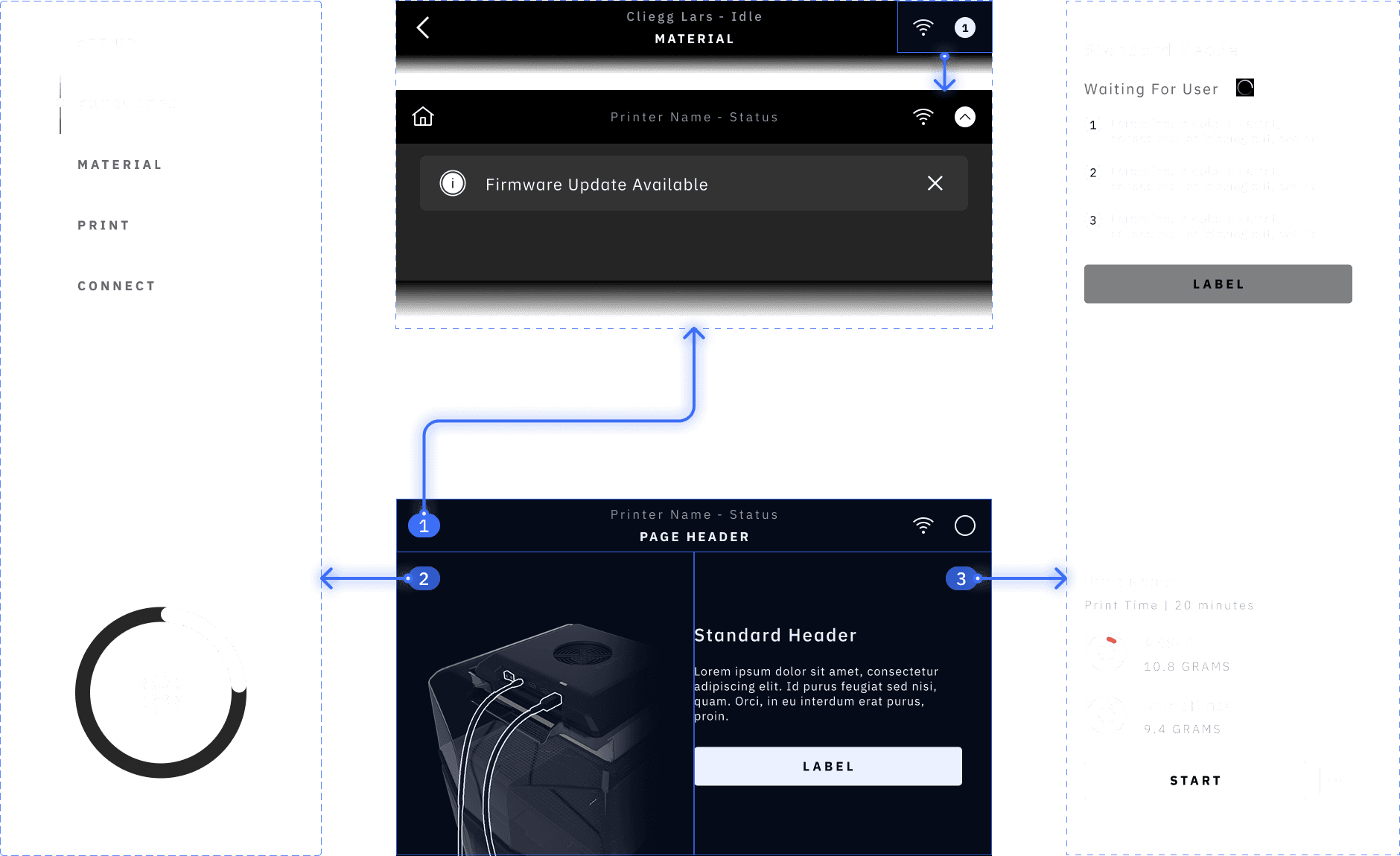
Fixed top bar and adaptive split-screen pattern used across setup and print workflows.

Left pane shows progress and media; right pane communicates instructions and CTAs, keeping context and actions predictable.

Additional templates extend or simplify the shell — like full-width menus, dual-pane material setup, or one-step modals. These preserve the same top bar and button logic while adapting to task context.

Wizards

Step header → primary instruction → secondary or numbered instructions → contextual media.
Fixed top bar and adaptive split-screen pattern. Left pane shows progress and media; right pane communicates instructions and CTAs, keeping context and actions predictable.

Progress Rings

Communicate phase and outcome: The same visual language appears in management suite (software).

Fixed top bar and adaptive split-screen pattern. Left pane shows progress and media; right pane communicates instructions and CTAs, keeping context and actions predictable.

2025 Vishnu Anantha

2025 Vishnu Anantha

2025 Vishnu Anantha